Sunday Tech Corner with Alex
How Health Technology Has Become Part of My Everyday Life
For those who might not be aware, I had PVP Green Laser surgery last week to help address an ongoing urinary retention issue, and I’ve been spending the past week recovering from that.
I don’t know if it’s just me, but ever since COVID, it feels like there has been one medical issue after another. Whether it involves me, my husband, or my parents, health has become a much bigger part of everyday life than it used to be.
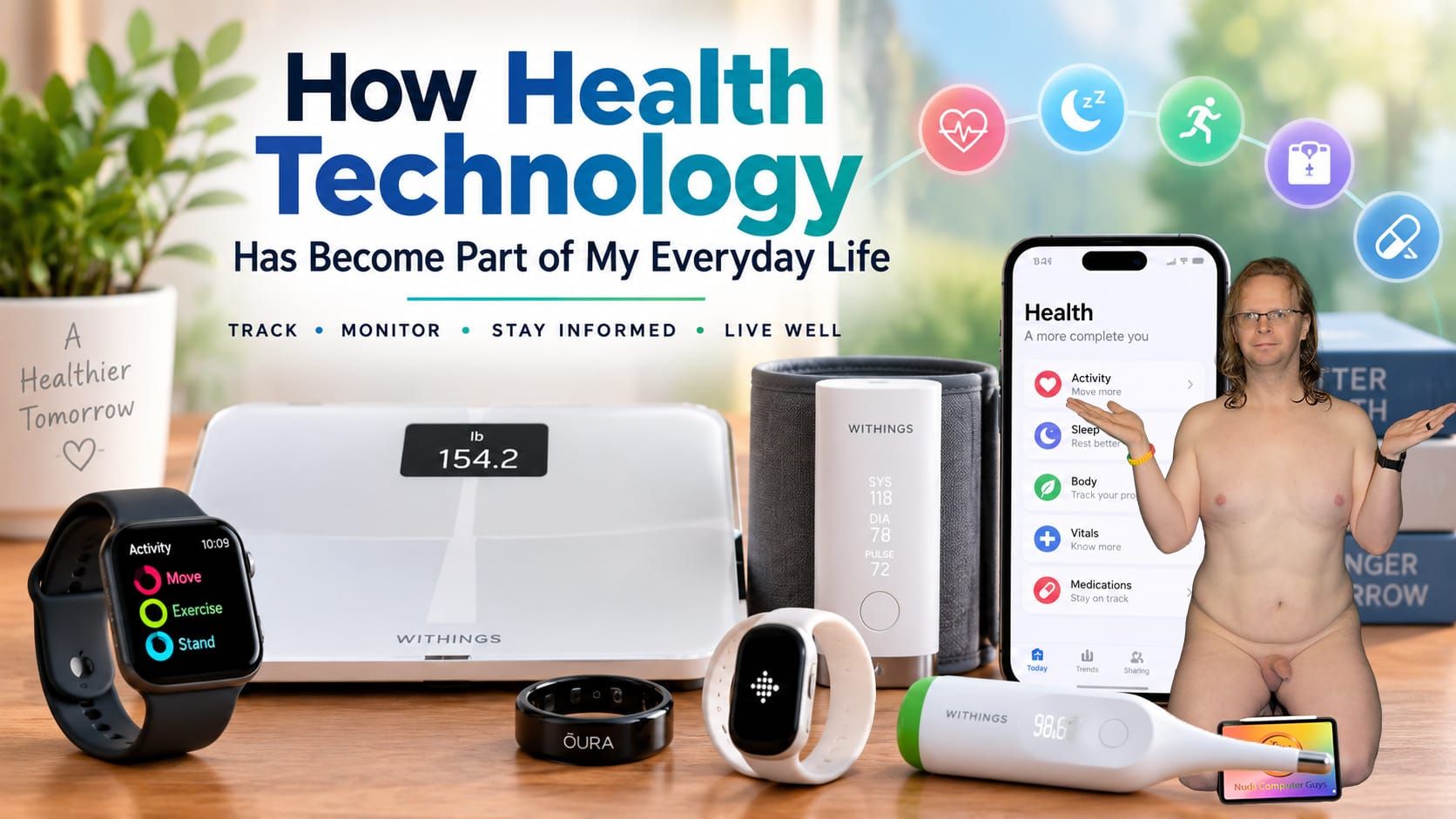
Going through all of this has also made me pay more attention to the technology I use to monitor my health. Over the years, I’ve accumulated quite a collection of health-related gadgets, from smartwatches and scales to blood pressure monitors, thermometers, and smart rings.
Of course, none of these devices replaces seeing a doctor or receiving proper medical care. What they can do, however, is make it easier to keep track of changes and trends over time. Instead of relying on a measurement taken once or twice a year at a doctor’s appointment, I can have months or even years of information available to look back on.
My Health Tech Journey Started With the Apple Watch
One of the first health-related devices I bought was the original Apple Watch when it came out in 2015. At the time, I loved being able to look at my wrist and see my heart rate, how many steps I had taken, calories burned, and how active I had been throughout the day.
Compared with what the Apple Watch can do today, the original model was pretty basic. However, features such as the heart-rate sensor, Workout app, and those now-famous Activity rings made tracking everyday fitness much easier.
Over the years, Apple has continued adding more health capabilities to the Apple Watch. That has actually changed the way I decide whether to upgrade. I no longer feel the need to buy a new Apple Watch simply because a new model comes out. Usually, I wait until there is a meaningful new health feature that makes upgrading worthwhile.
That is why I’m particularly interested in seeing what Apple does with the next Apple Watch Ultra. If the Ultra 4 introduces some compelling new health-monitoring features, that may finally give me a reason to upgrade again.
Withings Has Become a Big Part of My Setup
Another company I’ve become a big fan of when it comes to health technology is Withings. I currently have several of its products, including the Body Cardio and Body Scan scales, BPM Connect blood pressure monitor, and Thermo smart thermometer.
What I really like about Withings isn’t necessarily one particular measurement or feature. It’s how seamlessly everything works together.
Once the devices are configured, I don’t have to constantly think about connecting them to my phone. Compatible devices can synchronize their measurements using Wi-Fi, so I can step onto the scale or take my blood pressure and let the technology handle the rest.
That might sound like a small thing, but it makes a huge difference. Health technology is most useful when it becomes part of your normal routine instead of becoming another gadget you have to manage.
My Body Scan scale is a good example. Instead of simply telling me my weight, it can provide much more information about body composition and other health measurements. Over time, that gives me a much more complete picture than simply looking at a number on a traditional bathroom scale.
The same goes for my blood pressure monitor. Being able to take measurements at home and have a history of those readings available makes it much easier to see whether something is changing over time.
My Experience With the Oura Ring
For the past few years, I’ve also been interested in smart rings because they can collect health and sleep information without requiring you to wear a watch around the clock.
I had been using the Oura Ring 4, and there was actually quite a bit I liked about it. Oura does a very good job with its software, particularly when it comes to presenting information about sleep, activity, and recovery in a way that is easy to understand.
I also really liked Finn, Oura’s AI health assistant. Of the AI-based health assistants I’ve used so far, Finn has probably been my favorite.
Unfortunately, I became increasingly frustrated with the battery life of my ring. Mine eventually started lasting less than three days between charges. I had it replaced, but after a few months I began experiencing similar battery problems with the replacement.
For a device that is supposed to quietly collect health information in the background, constantly having to think about charging it defeated some of the convenience for me.
Giving Google Fitbit Air a Try
That frustration led me to try Google’s new Fitbit Air this year.
Setup was easy, and so far I’ve enjoyed using it. At the same time, I wouldn’t say that I’ve discovered any groundbreaking new health technology. It provides many of the features you would expect from a modern health wearable, including information around sleep, activity, fitness, and overall wellness.
What interests me more is what Google is doing with the larger health ecosystem surrounding its devices.
Google has been bringing more health information together through Google Health, and I think there is a lot of potential there. Having information from wearables, connected health devices, and other health sources available in one location could eventually make Google Health a much stronger competitor to Apple Health.
Right now, though, I still think Apple has the more mature health ecosystem.
One feature I would especially like to see Google improve is medication tracking. Apple Health allows users to create a medication list, establish schedules, receive reminders, and keep track of whether medications have been taken.
I’d also like to see Google expand areas such as symptom logging, long-term health trends, health-data sharing, and the ability to organize more types of medical information.
Google is clearly putting more effort into health technology, so I’m interested to see how quickly those capabilities develop.
It's Really About the Trends
Looking around at all the health technology I use today, it’s pretty amazing how much things have changed.
Ten years ago, I probably wouldn’t have imagined owning a smartwatch, smart ring, connected scale, blood pressure monitor, thermometer, and other devices that could all contribute information about my health.
But the most valuable part isn’t having another gadget or obsessing over every number that appears on the screen.
For me, it’s about the trends.
One unusual heart-rate reading, a bad night of sleep, a higher blood-pressure measurement, or a change on the scale doesn’t necessarily tell you very much by itself. Having months or years of information, however, can make it much easier to recognize when something is changing.
As health issues have become a bigger part of life for me and my family, I’ve come to appreciate having that information available.
Health technology certainly isn’t perfect, and it shouldn’t replace professional medical care. But these devices can give us another tool for understanding what is happening with our bodies and provide useful information to discuss with our healthcare providers.
For someone who already loves technology, that may be one of the most meaningful ways technology has become part of my everyday life.
Links where you can buy these products:
- Apple Watch Ultra 3 — the latest Apple Watch Ultra
- Withings BodyFit — a current alternative to the older Body Cardio scale
- Withings BodyScan 2 — the latest version of the Body Scan
- Withings BPM Vision — the latest alternative to the BPM Connect
- Withings BeamO — the modern successor to the Thermo thermometer
- Oura Ring 5 — the latest generation of the Oura Ring
- Google Fitbit Air — Google’s current Fitbit Air tracker
Product availability, pricing, features, and model names may change over time.