Sunday Tech Corner with Alex
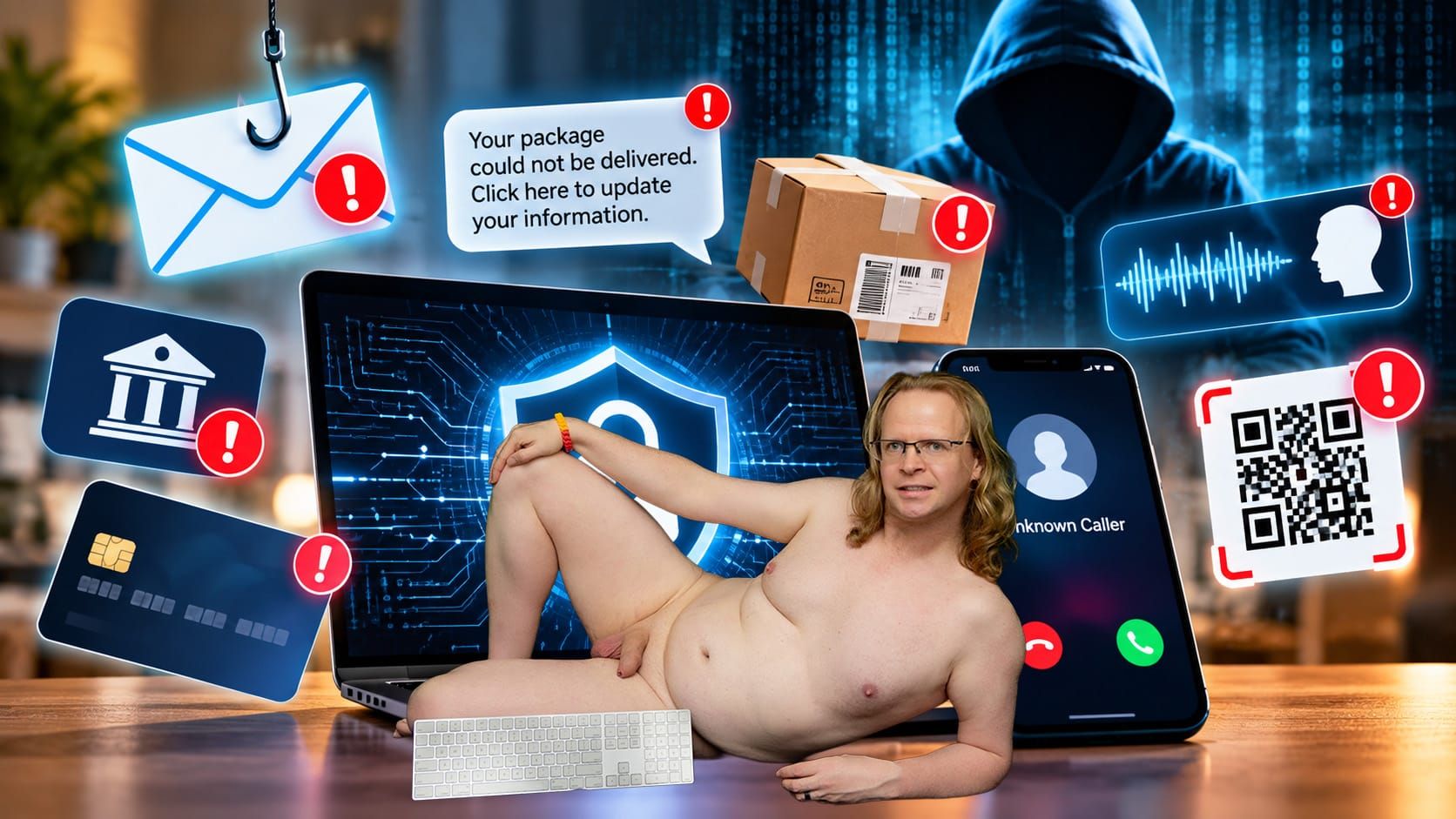
Cybersecurity threats continue to evolve, and unfortunately, scammers are getting better at making their attacks look legitimate. Gone are the days when every scam email was filled with spelling mistakes and obviously suspicious links. With artificial intelligence and increasingly sophisticated tools, criminals can create convincing emails, text messages, websites, phone calls, and even voices.
Here are some of the biggest security threats I think everyone should know about right now.
AI Is Making Scams More Convincing
Artificial intelligence has become one of the biggest changes in online scams. Criminals can use AI to write convincing phishing emails, create fake photographs and videos, and even clone someone's voice.
Imagine receiving a phone call that sounds exactly like a family member saying they've been in an accident and desperately need money. Your first instinct might be to help immediately.
That's exactly what the scammer wants.
If someone unexpectedly asks you for money or sensitive information, verify their identity another way. Hang up and call them directly using a number you already know. Families may even want to establish a private word or phrase that everyone knows.
Beware of Fake Bank Fraud Alerts
Another scam I've seen becoming increasingly sophisticated involves criminals pretending to be your bank.
You might receive a text saying:
"Did you authorize a $1,249 purchase? Reply NO if you don't recognize this transaction."
After you respond, someone calls pretending to work in your bank's fraud department. They may already know your name, phone number and even some information about your accounts, making the call sound legitimate.
Eventually, they ask for a verification code sent to your phone. That code may actually allow the criminal to access your account.
Never give someone your password, PIN or one-time verification code because they called you. Hang up and contact your bank directly using the number on the back of your debit or credit card.
QR Code Scams
QR codes have become incredibly common. We use them at restaurants, parking meters, stores and events.
Unfortunately, scammers know this.
Criminals can place a fraudulent QR-code sticker over a legitimate one. Scanning it may send you to a fake website designed to steal your login information or credit-card number.
Before entering sensitive information after scanning a QR code, check the website address carefully. If you're paying for parking or accessing an account, using the company's official app or website can be safer.
Fake Package-Delivery Messages
Most of us order things online, which makes fake UPS, FedEx, USPS and Amazon delivery notifications particularly effective.
You might receive a text claiming that your package couldn't be delivered because your address is incomplete. The message asks you to click a link and pay a small "redelivery fee."
That website may be designed to steal your credit-card information.
Instead of clicking the link, open the delivery company's official app or manually visit its website and enter your tracking number.
Tech-Support Scams Aren't Going Away
You may encounter a frightening pop-up claiming:
"YOUR COMPUTER HAS BEEN INFECTED!"
It may even tell you not to shut down your computer and provide a phone number for Microsoft, Apple or another technology company.
Don't call it.
The person answering isn't technical support. Their goal is often to convince you to install remote-access software so they can control your computer.
If you're concerned about your computer, close the browser and contact someone you trust for assistance.
Password Theft Is Still a Huge Problem
One of the simplest ways criminals get into accounts is still through stolen passwords.
If you use the same password for Netflix, Facebook, Gmail, Amazon and your bank, a breach at one company could potentially put several accounts at risk.
I highly recommend using a password manager and creating a different password for every important account. Whenever possible, enable two-factor authentication or, even better, use passkeys when a service supports them.
Passkeys can provide much stronger protection against phishing because there's no traditional password for you to accidentally give a scammer.
The Most Important Security Feature Is You
You can have antivirus software, spam filtering, password managers and the latest security updates, but criminals frequently target the person rather than the technology.
Don't click the link. Don't give out the verification code. Don't install software because someone called you. And don't send money simply because someone says the situation is an emergency.
Take a minute and independently verify what's happening.
Technology continues to change, and scams will continue changing with it. But developing the habit of stopping and verifying before you click, respond or send money remains one of the best security tools you can have.