
The Jester’s Job Is More Important Than Ever

Some of you know I do contract work for a company that teaches people how to become retreat leaders. I love the organization. The staff is phenomenal, and I’m honored they want my voice in the mix.
Yesterday, I had a meeting with the CEO, and much of our conversation centered on a problem facing almost everyone selling experiences right now.
People are holding onto their money.
Our program costs $3,500, and I believe deeply in its value. But this isn’t simply about selling a course. We’re seeing the same hesitation among people considering retreats. The middle of the retreat market is struggling.
Luxury retreats are still selling. Bucket-list trips are still selling. Give people something unusual enough, specific enough, or irresistible enough, and they’ll find the money.
But another yoga retreat? Another meditation weekend? Another sound bath getaway? There are thousands of them competing for the same people at a moment when those people are looking harder at every dollar they spend.
We’re in something of a retreat recession.
So I asked my boss a simple question: “What would you like me to do?”
Her answer surprised me.
“I need you to create something fun. I need you to bring some joy back to people.”
Then she started talking about GoNaked.
She told me she sees what happens when I talk about our community. People feel included. They laugh. They make friends. They look forward to seeing each other. They feel like they belong somewhere. She told me she wanted some of that energy brought into this other work.
I should have been thrilled. Instead, I suddenly felt the enormous weight of being told to be fun.
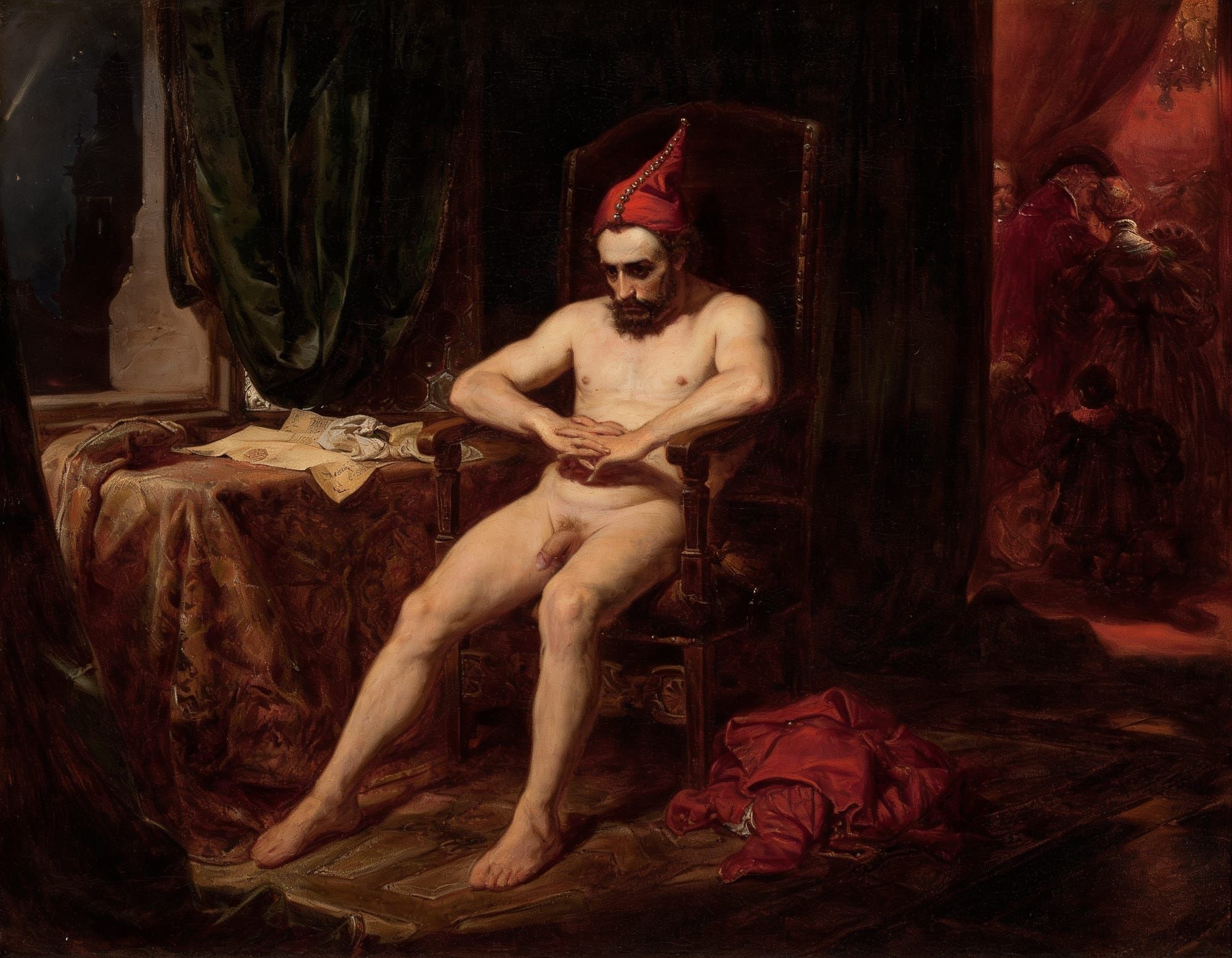
It reminded me of the court jester.
The jester had an odd job. He walked into rooms carrying all the same realities everyone else carried. Wars were still happening. Money was still tight. People were still angry, frightened, jealous, horny, exhausted, heartbroken, ridiculous, and human.
His job wasn’t to pretend none of those things existed.
His job was to change the temperature of the room.
I think I’ve been playing that role for years without thinking much about it.
With you guys, being the jester comes easily because you give the energy right back. Sure, we have problems. We lose people we love. We worry about money. We deal with aging bodies, relationships, loneliness, work, families, and all the ordinary crap life throws at us.
And then somebody posts a dirty joke.
Somebody sends a ridiculous picture.
We get naked somewhere.
We play Wordle.
We go on a trip.
We meet a stranger who becomes a friend.
We laugh our asses off over something nobody outside this community would understand.
None of those things solves the serious stuff. They give us somewhere to put the serious stuff down for a while.
There’s a difference.
So now I’ve been thinking about a deceptively difficult question:
How do you create fun?
You can schedule fun things and watch everyone stare at their phones.
You can plan games nobody wants to play.
You can spend thousands of dollars on entertainment and still have a room with no energy.
And sometimes you can put six people around a cheap table with a bottle of wine and have one of the best nights of your life.
Fun isn’t necessarily an activity.
I think it starts with permission.
Permission to be ridiculous. Permission to participate badly. Permission to laugh too loudly. Permission to meet somebody you normally wouldn’t meet. Permission to stop performing competence for a few hours. Permission to be curious. Permission to say yes to something harmless and stupid simply because there’s no good reason to say no.
Novelty helps. Surprise helps. Play helps.
But belonging matters more.
People have more fun when they feel safe enough to stop monitoring themselves.
Perhaps that’s what my boss sees when she looks at GoNaked.
We have built plenty of events over the years, but the events themselves were never the whole point. The real product has always been the feeling people get when they walk into the room and realize, “Oh. These are my people.”
That’s a difficult thing to put on an itinerary.
Yet I think it might be one of the most valuable things anyone creating experiences should be thinking about right now.
When money feels tight, people become selective. They start asking harder questions about what deserves their time and money.
A bed and breakfast isn’t enough.
A workshop isn’t enough.
A beautiful location isn’t enough.
People want to feel something.
They want a story worth telling when they get home. They want to meet somebody. They want to laugh. They want to surprise themselves. They want, even briefly, to feel lighter than they did before they arrived.
So I have a new assignment.
Be the jester.
I’m still figuring out what that means.
I suspect the answer isn’t going to be more games, more activities, or some clever formula for manufacturing happiness. I think my job is to look at everything we’re doing and ask a simpler question:
Where is the joy? Where is the moment when strangers become friends? Where is the surprise? Where do people get permission to stop taking themselves so damn seriously? And where is the thing they’ll still be laughing about three months later?
Those questions feel useful far beyond retreats.
Because none of us gets to control the economy. We don’t control what happens in Washington, what happens on Wall Street, what somebody we love does tomorrow, or what unexpected problem lands in our lap next Tuesday.
But we do have some say over the temperature of the rooms we enter. We get to decide what we bring with us.
Sometimes your contribution is wisdom. Sometimes it’s compassion. Sometimes you’re the person who organizes everything and makes sure everybody gets home safely.
And sometimes your job is to walk into the room wearing the funny hat.
I think I’m becoming increasingly comfortable with the funny hat.