
The Naked Portrait That Just Sold for $40 Million

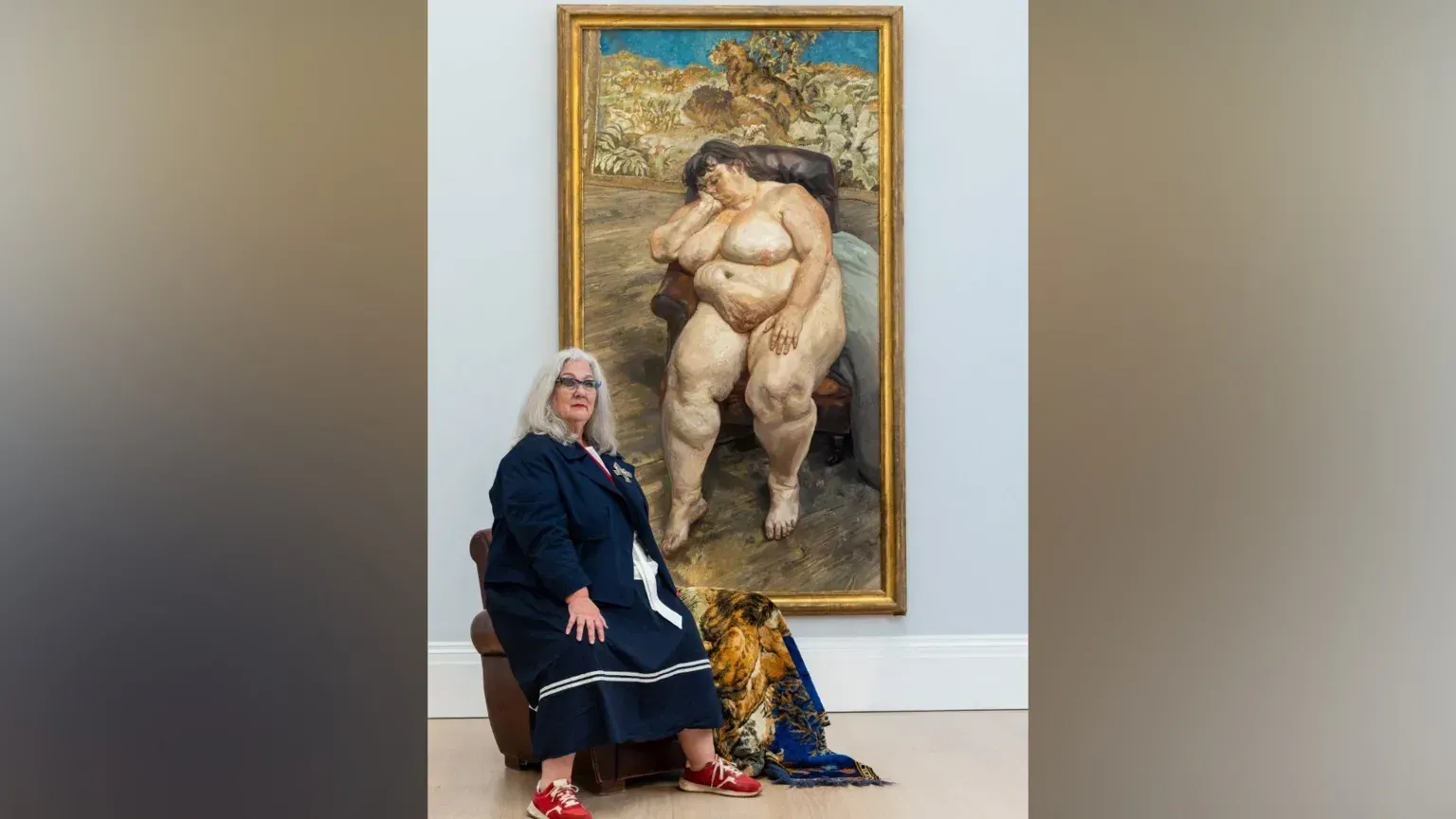
When most people hear that a nude portrait sold for more than $40 million, they imagine a flawless young model, carefully posed to fit society's idea of beauty.
Instead, the painting that recently captured headlines features Sue Tilley, a woman who proudly describes herself as being shown in her "glorious naked bigness," comfortably settled into an armchair with a lion-patterned carpet behind her.
The painting, Sleeping by the Lion Carpet, was created by celebrated British artist Lucian Freud, who spent nearly nine months completing the work. Tilley sat for him several days a week, often from morning until late afternoon, as Freud painstakingly captured every fold, curve, shadow, and imperfection. There was no attempt to flatter or idealize her body. The goal was simply to paint what was there.
That honesty has become one of the painting's greatest strengths.
Recently, the portrait sold at auction for £25 million (more than £29 million including fees), making it one of Freud's most valuable works. While Tilley never shared in the sale proceeds, she says she has enjoyed unexpected opportunities over the years because of the painting and holds no bitterness about it.
One thing she does object to is being called Freud's "muse."
"I hate that word," she laughed in interviews. "I imagine some delicate little person floating around in chiffon dresses." That certainly wasn't her. Their relationship was built on friendship, conversation, long lunches, and the discipline required to create a remarkable work of art.
Perhaps the most refreshing part of the story is what happened after the headlines faded.
Today, Tilley lives a quiet life by the sea. She spends her days watching television, visiting the beach, chatting with friends, and enjoying the simple routines of everyday life. Every now and then, the painting resurfaces in the news, life gets exciting for a week, and then things return to normal.
For those of us in the body-positive and naturist communities, there's something deeply satisfying about that.
Freud's portrait doesn't celebrate perfection. It celebrates presence. It reminds us that bodies don't have to be sculpted, youthful, or filtered to be worthy of admiration. They simply have to be real.
In a culture obsessed with editing away every wrinkle and every pound, it's refreshing to see one of the world's most valuable paintings unapologetically honor a body exactly as it was.
That's a message worth framing.