
To Hell and Back

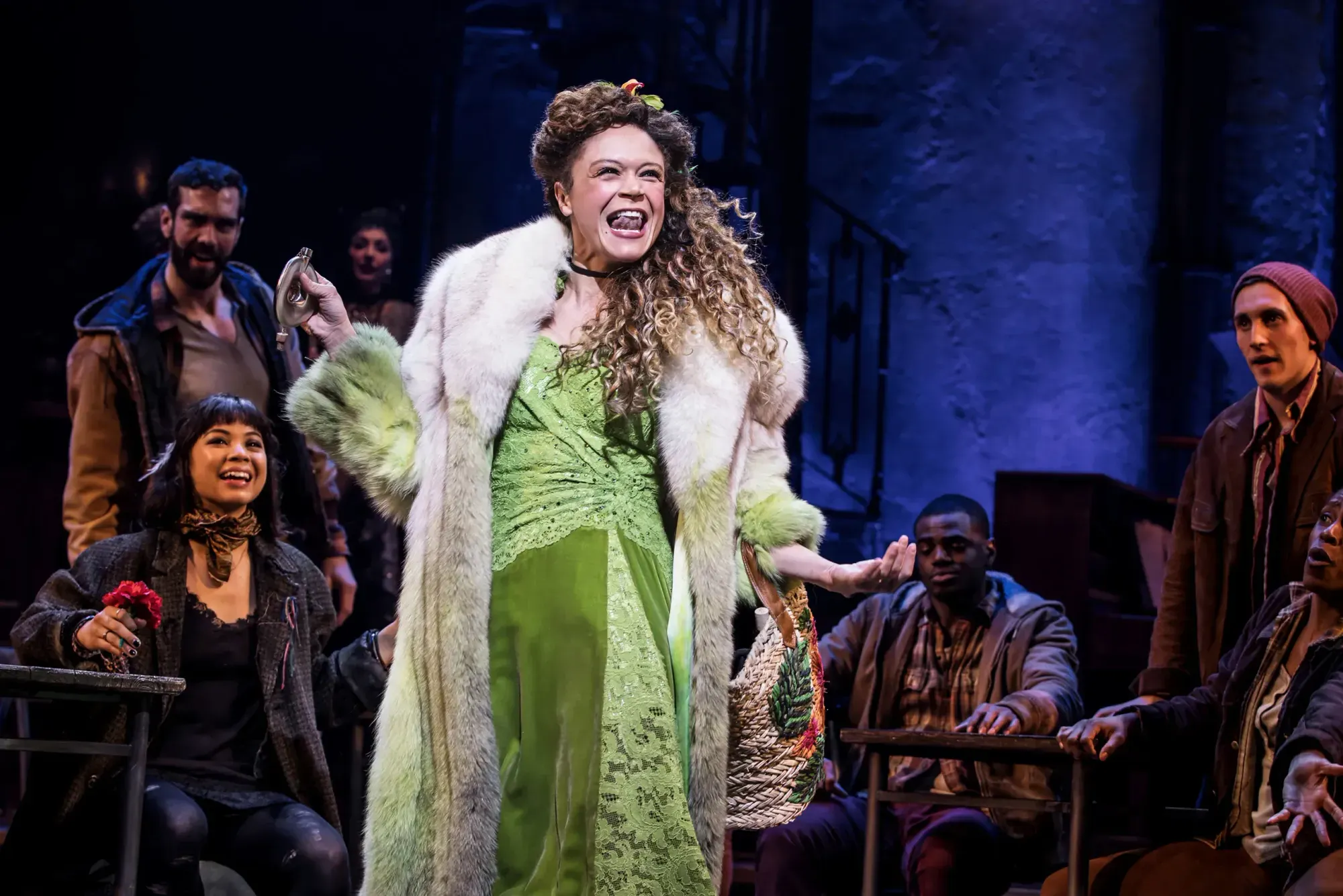
I've always been a Broadway fag.
I don't mean that casually. I mean the kind of person who can lose an entire afternoon down a rabbit hole of cast recordings, who knows which revival got the choreography right, and who will happily argue about whether Patti LuPone should be classified as a national treasure.
And somehow, despite all of that, I had never seen Hadestown.
That wasn't an accident.
I had deliberately avoided the cast albums for years because I wanted my first experience to be exactly that: my first experience. No spoilers. No familiar melodies. No preconceived expectations. Just the lights going down and the story unfolding in front of me.
When the filmed production finally appeared in movie theaters this week, I bought my ticket.
I'm so glad I did.
I'm not going to review the production itself. Plenty of people have already done that better than I ever could. What stayed with me wasn't the staging or the music.
It was an old Greek myth I'd somehow never really understood.
Most people know the broad strokes.
Hades rules the underworld. His wife, Persephone, spends half the year above ground bringing life, flowers, and warmth, and half the year below, where winter settles over the earth.
Then there are the young lovers: Orpheus and Eurydice.
In the traditional myth, Eurydice dies from a snakebite. In Hadestown, she is simply hungry, and Hades offers security in exchange for her freedom. Either way, she ends up in the underworld.
Orpheus refuses to accept her loss.
He journeys into Hell itself to bring her home.
Moved by Orpheus's music, Hades offers him a bargain.
"You may take her back... but you must lead the way. She will walk behind you, and you must never turn around. If you look back before you've both reached the surface, she will be lost forever."
Most versions of the story make it feel as though this journey lasts only a few minutes.
It didn't.
I have heard varying stories, but one of them includes Orpheus and Eurydice walking for more than two years.
For two years, he heard her footsteps.
For two years, he felt her presence behind him.
For two years, he believed she was still there.
Until, just before reaching daylight, doubt slipped into his mind.
What if she wasn't following anymore?
What if he had been alone this whole time?
He turned.
And in that instant, Eurydice disappeared forever.
Then I heard someone describe the myth in a way that completely changed it for me.
What if Orpheus never really brought Eurydice back from the dead?
What if he went to Hell because grief dragged him there?
What if the long walk wasn't a physical journey at all, but the slow, painful road through mourning?
When someone dies, we still hear them.
We reach for the phone.
We think we catch their laugh in another room.
We instinctively save a seat for them.
They're behind us everywhere we go.
Not because they're physically there, but because grief is.
Maybe Eurydice died the day she entered the underworld.
Maybe Orpheus wasn't rescuing her.
Maybe he was learning how to live without her.
And perhaps the hardest part of healing isn't the crying.
It isn't the funeral.
It isn't even the loneliness.
The hardest part is turning around and admitting that they're really gone.
That thought hit me harder than I expected.
Every year around this time, my Timehop app quietly reminds me where my own journey into the underworld began.
Photos.
Status updates.
Hospital visits.
The day my mom started dialysis.
At the time, none of us knew how quickly things would unfold. Within just a few months, dialysis became hospice. Hospice became goodbye.
She died on November 1, sixteen years ago.
For a long time after that, I would've sworn she was still following me.
I heard her in my head almost every day.
I'd catch myself thinking, I need to tell Mom about this.
I'd reach for the phone before remembering.
Sometimes I could almost hear her voice correcting me, encouraging me, laughing at one of my terrible jokes.
She was always just behind me.
It wasn't until almost two years had passed that I finally turned around.
Not literally.
Emotionally.
Spiritually.
I stopped looking over my shoulder for the version of life where she was still waiting for me.
And that's when I understood something painful.
She wasn't behind me anymore.
Not in the way I wanted her to be.
I couldn't keep walking backward through my life hoping to find someone who had already finished their journey.
That realization broke my heart all over again.
But it also gave me permission to keep walking.
Maybe that's what this myth has been trying to tell us for over two thousand years.
Grief asks us to go to Hell.
Love gives us the courage to make the journey.
But healing eventually asks something almost impossible of us.
Turn around.
Accept what cannot be changed.
Let the dead belong to the past, not because they mattered less, but because they mattered so much that they changed us forever.
The goal isn't to forget them.
The goal is to carry what they gave us into the next season of our lives.
Persephone always leaves the underworld.
Winter always gives way to spring.
Life has this remarkable habit of beginning again—not because we stop loving the people we've lost, but because love itself refuses to stay buried.
Maybe that's the real miracle.
Not that anyone comes back from Hell.
But that somehow... we do.