
We'll Take a Glass Together: A Broadway Moment That Means Even More 36 Years Later
One unforgettable dance, two extraordinary Broadway performers, and a heartbreaking story from the height of the AIDS crisis. Michael Jeter and Brent Barrett's 1990 Tony Awards performance reminds us why we should never wait to start living.

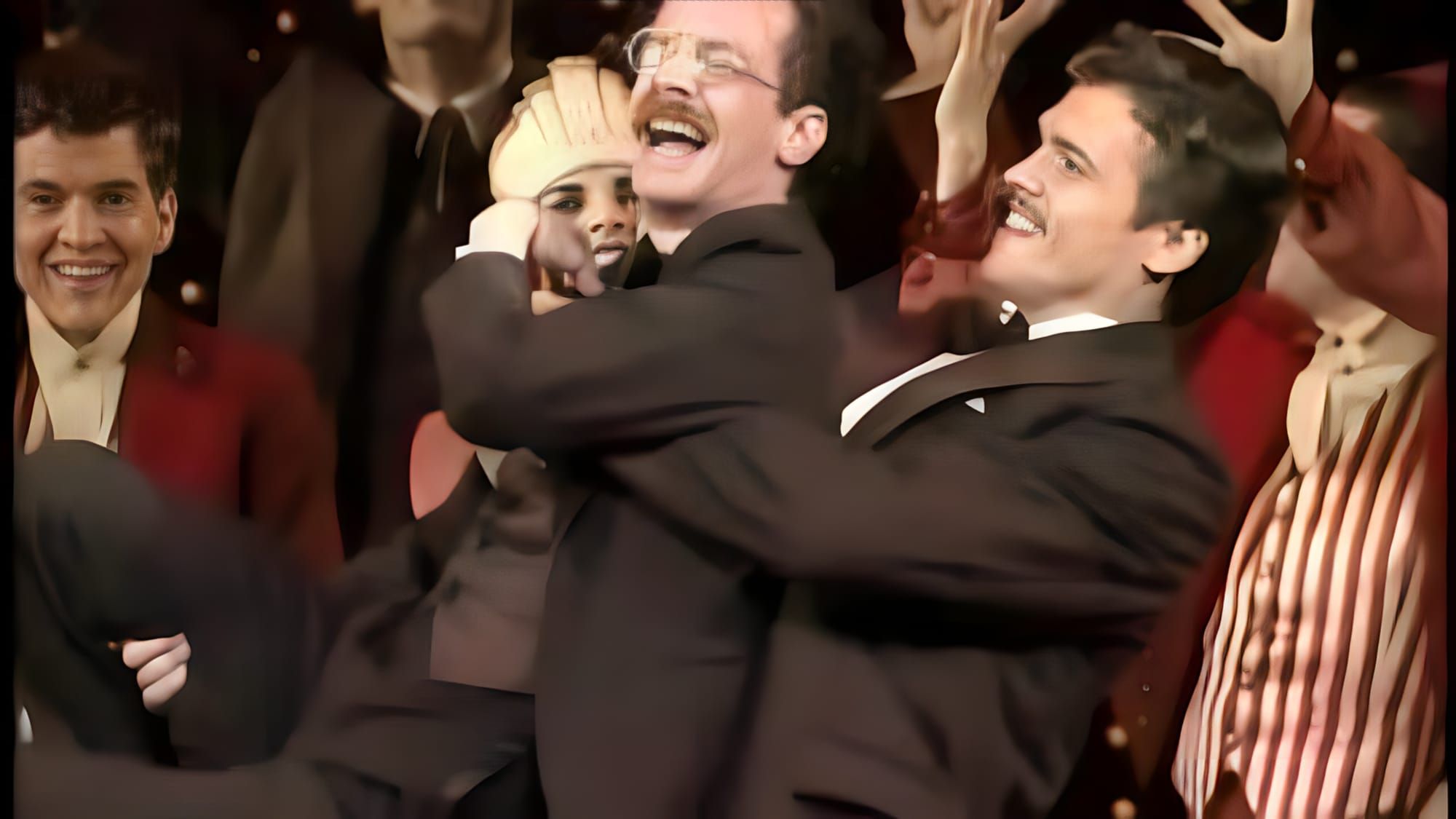
This Damn Video Makes me Tear Up Every Time I Watch It
Two extraordinary performers, one unforgettable dance, and a reminder that life is meant to be lived.
Every so often, a performance comes along that is so joyful, so brilliantly executed, and so full of life that you can watch it decades later and still get goosebumps.
This is one of those performances.
Link To Video: https://youtu.be/Kyw5u2LZ8pM?si=xhlTai4Z13yCfNAp
At the 1990 Tony Awards, the handsome and impossibly charming Brent Barrett joined the incomparable Michael Jeter for "We'll Take a Glass Together," a showstopping number from the Broadway musical Grand Hotel.
If you've never seen it, you're in for a treat. And if you have, watch it again. Because knowing the story behind it makes this extraordinary little piece of Broadway history even more meaningful.
A Dying Man Checks Into the Grand Hotel
The musical takes place in Berlin in 1928, inside a glamorous hotel where wealthy guests come and go, bringing their secrets, ambitions, romances, and troubles along with their luggage.
Among them is Otto Kringelein, played by Michael Jeter.
Kringelein is an aging, terminally ill bookkeeper who has spent his entire life working, saving, following the rules, and denying himself almost every pleasure imaginable.
Now he's dying.
And he's decided that before he goes, he's going to find out what it actually feels like to live.
So he checks into the magnificent Grand Hotel, determined to spend his remaining money and time enjoying everything he's missed.
One evening, he finds himself in the hotel's bar, where he meets the dashing Baron Felix von Gaigern, played in this performance by Brent Barrett.
Oh, and what a baron he is.
Handsome, sophisticated, beautifully dressed, and dripping with confidence, he seems to have everything Kringelein has spent his life dreaming about.
Except there's a little problem.
The baron isn't exactly what he appears to be.
He's a genuine aristocrat, but he's also broke, desperate, and involved in some rather questionable activities. Let's just say his charm is considerably more substantial than his bank account.
Still, he recognizes something in this awkward, dying little man. And rather than dismiss him, he invites him to share a drink.
And then another.
Before you know it, the two men are dancing.
And Oh, How They Dance!
What follows is one of the most exhilarating musical numbers ever performed on the Tony Awards stage.
Barrett is everything you'd expect from a Broadway leading man: tall, gorgeous, athletic, and effortlessly suave.
But it's Michael Jeter who absolutely steals the show.
His body seems to be made of rubber. His legs fly in directions that shouldn't be anatomically possible. His arms flail, his feet kick, and his entire being seems to explode with the thrill of discovering joy for the very first time.
Director and choreographer Tommy Tune created something remarkable here.
The dancing is spectacular, of course. But it's also storytelling.
You're watching a man who has spent his entire life afraid to live suddenly discover that he has nothing left to lose.
And for a few magnificent minutes, he is gloriously, outrageously happy.
But There's Another Story Behind This Performance
Remember, this was 1990.
For gay men, particularly those of us who lived through that era, those four numbers carry an enormous amount of emotional weight.
AIDS was devastating our community. Friends, lovers, neighbors, and extraordinarily talented performers were disappearing from our lives. Effective combination HIV treatments were still years away.
Michael Jeter was a gay man who would publicly disclose his HIV-positive status in 1997.
That knowledge adds another dimension to watching him portray a dying man determined to squeeze every last drop of pleasure out of life.
But there's an even more heartbreaking connection.
Brent Barrett wasn't the original baron in Grand Hotel.
That role belonged to David Carroll, a gifted Broadway performer who had earned a Tony nomination for his portrayal.
By the night of the awards ceremony, Carroll was seriously ill with AIDS and unable to perform. Barrett, who had succeeded him in the role, stepped into the spotlight alongside Jeter.
Carroll watched from the audience.
Less than two years later, in March 1992, Carroll died at just 41 years old from AIDS-related complications. Tragically, he collapsed in a recording studio while preparing to record music from Grand Hotel.
It's difficult to watch that 1990 performance today without thinking about the remarkable talent we lost during those years.
And about the men who were still dancing, singing, creating, and celebrating life while an epidemic unfolded around them.
The Man Who Won More Than a Tony
That evening, Michael Jeter won the Tony Award for Best Featured Actor in a Musical.
His acceptance speech was nearly as memorable as his performance.
Acceptance Speech Link: https://youtu.be/mhzsgp4lki8?si=UvDA9gdd29RxjT_W
Jeter spoke movingly about his struggles with alcoholism and drug addiction, his recovery, and his belief that people could change their lives and achieve things they once thought impossible.
There's a beautiful irony in that.
Here was a man in recovery, playing a character who discovers freedom through a night of drinking and dancing. Yet underneath the champagne and choreography, both stories were really about the same thing.
Second chances.
Finding joy.
And refusing to let the past determine the rest of your life.
Jeter died in 2003 at the age of 50, leaving behind an extraordinary collection of stage, film, and television performances.
But for me, this number remains one of the most beautiful things he ever did.
Here's to Living While We're Alive
I think the older we get, the more we understand Otto Kringelein.
We spend so much of our younger lives being sensible. Working. Saving. Worrying about what other people might think. Putting off adventures until some imaginary future when everything will finally be perfect.
And then one day we realize that the future isn't guaranteed.
There's a wonderful lesson tucked inside this exuberant Broadway number.
Don't wait until you're dying to give yourself permission to live.
Take the trip. Order the champagne. Dance with the handsome stranger. Spend the money on a memory worth making.
And if you find yourself in a grand hotel somewhere, sitting next to a charming baron whose story seems a little too good to be true?
Well, perhaps you should take a glass together.
Just keep an eye on your wallet.
It's a few minutes of pure theatrical magic. And after all these years, it still brings a lump to my throat and a smile to my face.
Here's to the men who taught us how to live.