
What Makes a Man? 39 Photographs That Challenge Everything We Think We Know About Masculinity

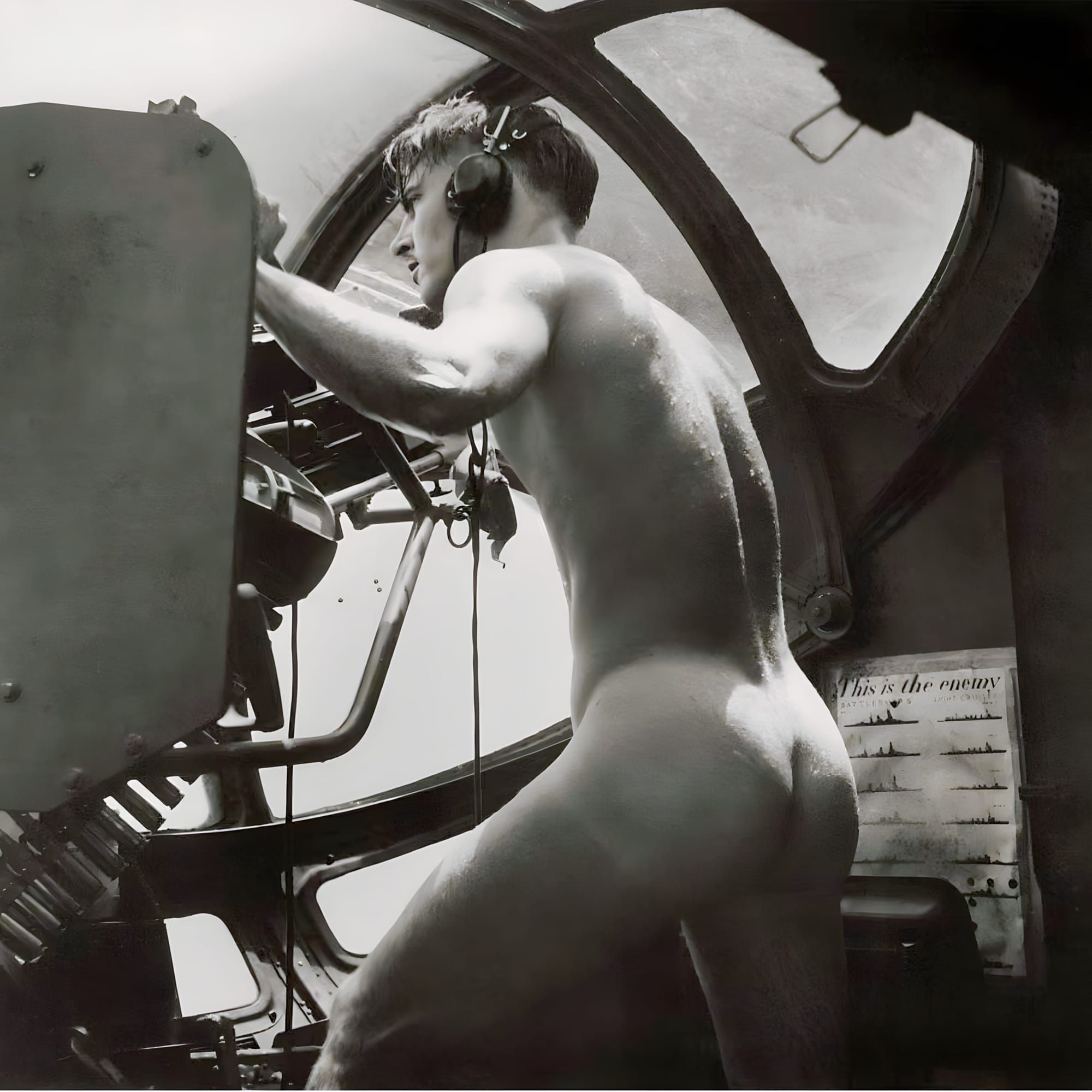
From Arnold Schwarzenegger's muscles to men kissing, crying, wearing dresses, and pushing baby strollers, a remarkable collection of photographs asks a deceptively simple question: Who gets to decide what makes a man?
For generations, men have been handed a rather ridiculous instruction manual. Be strong. Don't cry. Be tough. Don't show weakness. Look masculine. Act masculine. And whatever you do, don't let anyone question your manhood.
Fortunately, some men never bothered reading the manual.
A fascinating new feature published October 17 in The Guardian examines 39 photographs that have helped shape, challenge, and occasionally turn upside down society's understanding of masculinity.
Titled Muscles, Metrosexuals and Male Tears: The 39 Pictures That Changed the Way We See Men (for Good and for Bad), the collection travels through more than a century of photography, showing how our ideas about being a man have changed—and how stubbornly some old expectations refuse to disappear.
For those of us who believe that men should be free to live authentically, love openly, express themselves, and feel comfortable in their own skin, it's a particularly compelling collection.
And yes, there are a few naked men along the way.
When Muscles Became Masculinity
Let's begin with the obvious: the male body.
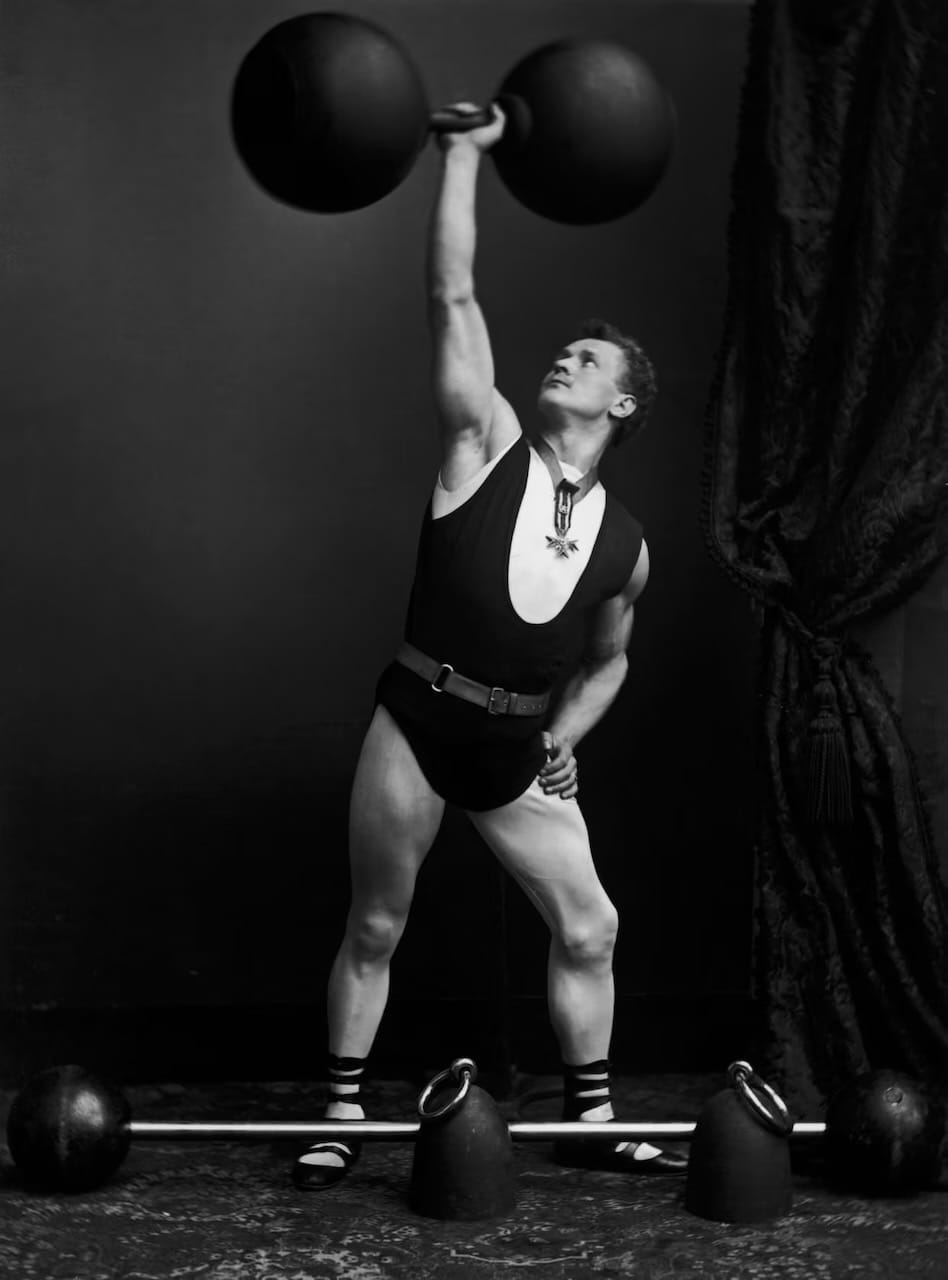
In 1895, pioneering bodybuilder Eugen Sandow was photographed displaying a physique that helped establish the modern muscular ideal. His carefully developed body became a model of physical perfection, influencing generations of men who would come to associate masculinity with broad shoulders, narrow waists, and impressive biceps.
Fast-forward to 1976, when photographer Robert Mapplethorpe captured a young Arnold Schwarzenegger flexing his muscles.
Schwarzenegger's extraordinary physique helped make bodybuilding mainstream, but there was something else interesting about the photograph.
Here was a man whose body practically screamed masculinity, photographed by an openly gay artist who celebrated male beauty and sexuality.
Schwarzenegger himself was reportedly comfortable with the admiration he received from gay men.
Imagine that. A heterosexual man secure enough in his masculinity to enjoy being admired by other men.
What a concept!
But The Guardian also points out something that should sound familiar to many GoNaked readers: the overwhelming emphasis on muscular male bodies leaves remarkably little room for the bodies most men actually have.
Where are the soft bellies? The love handles? The hairy chests? The bodies that have lived, loved, aged, and enjoyed a few too many excellent dinners?
Most men don't look like Arnold Schwarzenegger, and there's absolutely nothing wrong with that.
As male nudists, we understand something the advertising industry often seems determined to ignore: a man's body doesn't have to be extraordinary to be worthy of appreciation.
The Men Who Dared to Be Different
Some of the most memorable photographs in the collection feature men who challenged traditional expectations simply by being themselves.
There's Oscar Wilde in 1882, posing with the elegance and theatrical flair that helped make him a celebrity long before his most famous literary achievements.
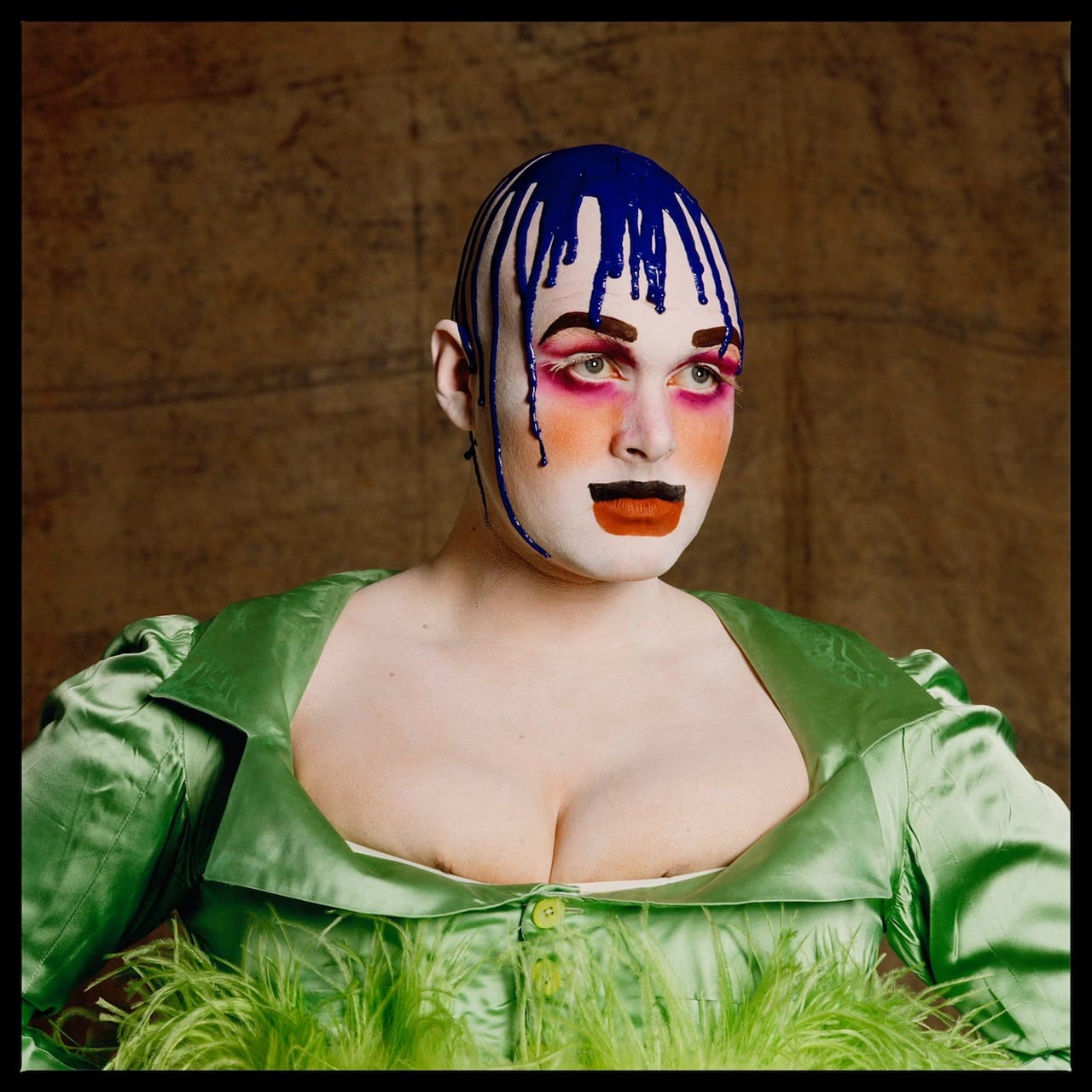
There's flamboyant professional wrestler Adrian Street, photographed in 1974 wearing glamorous clothing and high heels while standing alongside his coalminer father and other miners.
The contrast is wonderful.
Street had escaped the coal mines to become a larger-than-life wrestling personality who embraced sequins, makeup, and theatrical femininity without surrendering an ounce of his toughness.
Then there's David Beckham, who caused a minor cultural earthquake in 1998 when he stepped out wearing a sarong.
Apparently, a man wearing a piece of wrapped fabric was enough to send certain corners of the British press into a frenzy.
Beckham, bless him, never seemed particularly bothered.
And who could forget Billy Porter arriving at the 2019 Academy Awards wearing that magnificent black tuxedo gown?
Porter wasn't trying to disguise himself as a woman. He was demonstrating that a man could wear a dress and remain exactly what he was: a man.
These photographs remind us that clothing has always been one of society's favorite tools for policing masculinity.
Which makes you wonder what all these people would think about a group of men who simply decided not to wear any.
When Men Were Finally Allowed to Cry
Another powerful theme running through the collection is male vulnerability.
One photograph shows a Frenchman openly weeping during the Second World War as his country's military flags were being moved to safety.
Another captures English football star Paul Gascoigne crying during the 1990 World Cup.
These images became culturally significant partly because men were traditionally expected to keep their emotions hidden.
A man could express anger. He could demonstrate aggression. He could celebrate victory.
But sadness? Fear? Tenderness?
Those were supposedly signs of weakness.
Of course, anyone who has lived long enough knows how absurd that idea is.
Men grieve. Men worry. Men experience heartbreak. Men feel overwhelmed. And sometimes men cry.
There's nothing particularly masculine about pretending otherwise.
One of the pleasures of growing older is realizing that we no longer need to participate in every ridiculous performance society expects of us.
Sometimes the strongest thing a man can do is admit that he's hurting.
Two Men Kissing Shouldn't Be Revolutionary
For GoNaked readers, some of the most meaningful images explore gay masculinity and the courage required simply to exist openly.
Photographer Wolfgang Tillmans captured two men sharing a passionate kiss in a London nightclub in 2002.
It's an intimate, beautiful moment.
And yet, when the photograph was displayed in Washington, DC, in 2007, someone vandalized it.
Think about that.
Images of men fighting, shooting, and killing one another have been commonplace in popular culture for generations.
But two men kissing?
Apparently, that was too much for someone to tolerate.
The photograph later became a symbol of solidarity following the 2016 Pulse nightclub massacre in Orlando.
Other photographs explore the experiences of Black gay men and gay men living in countries where homosexuality carried enormous personal and legal risks.
Nigerian-born photographer Rotimi Fani-Kayode created striking portraits celebrating Black queer male identity during the 1980s, a period marked by intense homophobia and the AIDS epidemic.
Photographer Sunil Gupta documented gay life in India during the same decade, capturing men whose affection and identities had to remain largely hidden from public view.
These aren't merely photographs of men.
They're visual declarations that gay men have always existed, have always loved, and have always deserved to be seen.
The Trouble With Playing Tough Guy
Not every image in the collection celebrates progress.
Some demonstrate how masculinity has been manipulated to project power, authority, and intimidation.
There are photographs of political leaders posing as rugged outdoorsmen, wrestlers performing exaggerated displays of aggression, and men using their physical presence to dominate others.
One particularly unsettling photograph documents domestic violence and a young boy confronting his abusive father.
These images remind us that the expectations placed on men can have consequences far beyond personal insecurity.
When masculinity becomes synonymous with control, aggression, and emotional suppression, everyone can suffer.
But when masculinity allows room for compassion, tenderness, vulnerability, and individuality, something much healthier becomes possible.
And What About the Rest of Us?
Perhaps the most interesting observation in The Guardian article is how rarely ordinary male bodies appear in celebrated images of masculinity.
We're surrounded by superheroes, bodybuilders, professional athletes, and impossibly handsome models.
But what about the rest of us?
The retired schoolteacher with a belly and a beautiful smile.
The hairy gentleman in his seventies who still loves swimming naked.
The stocky guy who's never set foot inside a gym but has spent his life helping other people.
The slender man, the heavyset man, the scarred man, the aging man.
Where are their photographs?
Well, gentlemen, I know one place where you can find them.
Right here in our GoNaked community.
For years, we've celebrated male bodies exactly as they are. Not because every man looks like a magazine model, but because every man has a story, a personality, a history, and something worth appreciating.
That's one of the things I've always loved most about male nudism.
When the clothes come off, so many of those artificial signals of status and masculinity disappear with them.
We stop dressing to impress. We stop hiding behind expensive labels. We become a little less concerned with looking like the man we're supposedly expected to be.
And hopefully, we become a little more comfortable being the men we actually are.
Masculinity isn't a body type, a wardrobe, a sexual orientation, or a performance. There are as many ways to be a man as there are men in the world.
And thank goodness for that. Imagine how boring life would be if we were all Arnold Schwarzenegger.
Although I wouldn't necessarily complain if a few of us had his arms.
See All 39 Photographs
The Guardian's original feature is well worth your time. The photographs span generations, cultures, political movements, and changing ideas about what it means to be male.
Some will make you smile. Others may make you uncomfortable. A few might challenge assumptions you didn't even realize you still held.
And that's exactly what good photography should do.
A big thank-you to Gary for sending this fascinating article our way. It's a wonderful reminder that the conversation about masculinity is far from over—and that we should never stop questioning who gets to define it.
View all 39 photographs and read the original article in The Guardian
Source: The Guardian, October 17, 2026. Introduction by Luke Kennard, with photograph commentary by Gabrielle Schwarz and Felix Bazalgette.