
You Haven't Seen a Normal Body in Years

Part Three
Nude Travel Has a Funny Way of Becoming About Everything Except Nudity
First-time nude travel often comes with a tremendous amount of anticipation. Someone books a clothing optional resort or joins a nudist vacation months in advance, which gives his imagination plenty of time to invent increasingly elaborate reasons for panic.
What will everyone look like? What if I’m the oldest person there? What if I’m the youngest? What if my body doesn’t look like everyone else’s? What if people stare? What if nobody talks to me? What exactly am I supposed to do with my hands?
Then the trip begins and reality tends to be far less dramatic.
You take off your clothes. Your heart might race for a few minutes. You meet someone. You start talking. Someone asks where you’re from. Another guy wants to know whether you’ve visited the area before. Eventually somebody suggests lunch because apparently even naked people need sandwiches.
A few hours later, nudity has moved surprisingly far down the list of interesting things happening.
That shift is worth paying attention to because it exposes how much of our fear existed in anticipation rather than experience. The thing we spent weeks imagining becomes ordinary once we’re living it.
For some people, the first step feels easier in a clothing optional environment where there’s no pressure to undress immediately. That flexibility matters. Healthy nudist spaces should respect personal boundaries, comfort levels and consent. Nobody earns extra points for getting naked faster.
The experience isn’t about proving courage. It’s about becoming curious about what happens when you stop hiding a part of yourself you’ve spent years believing other people will judge.
Aging Looks Different When Older Bodies Are Visible
One of the losses created by our obsession with youth is that we don’t see enough older bodies living full lives. Advertising tends to celebrate youth, social media rewards particular kinds of beauty, and entertainment often treats aging as a problem to solve.
Spend time in a multigenerational nudist environment and you encounter another picture.
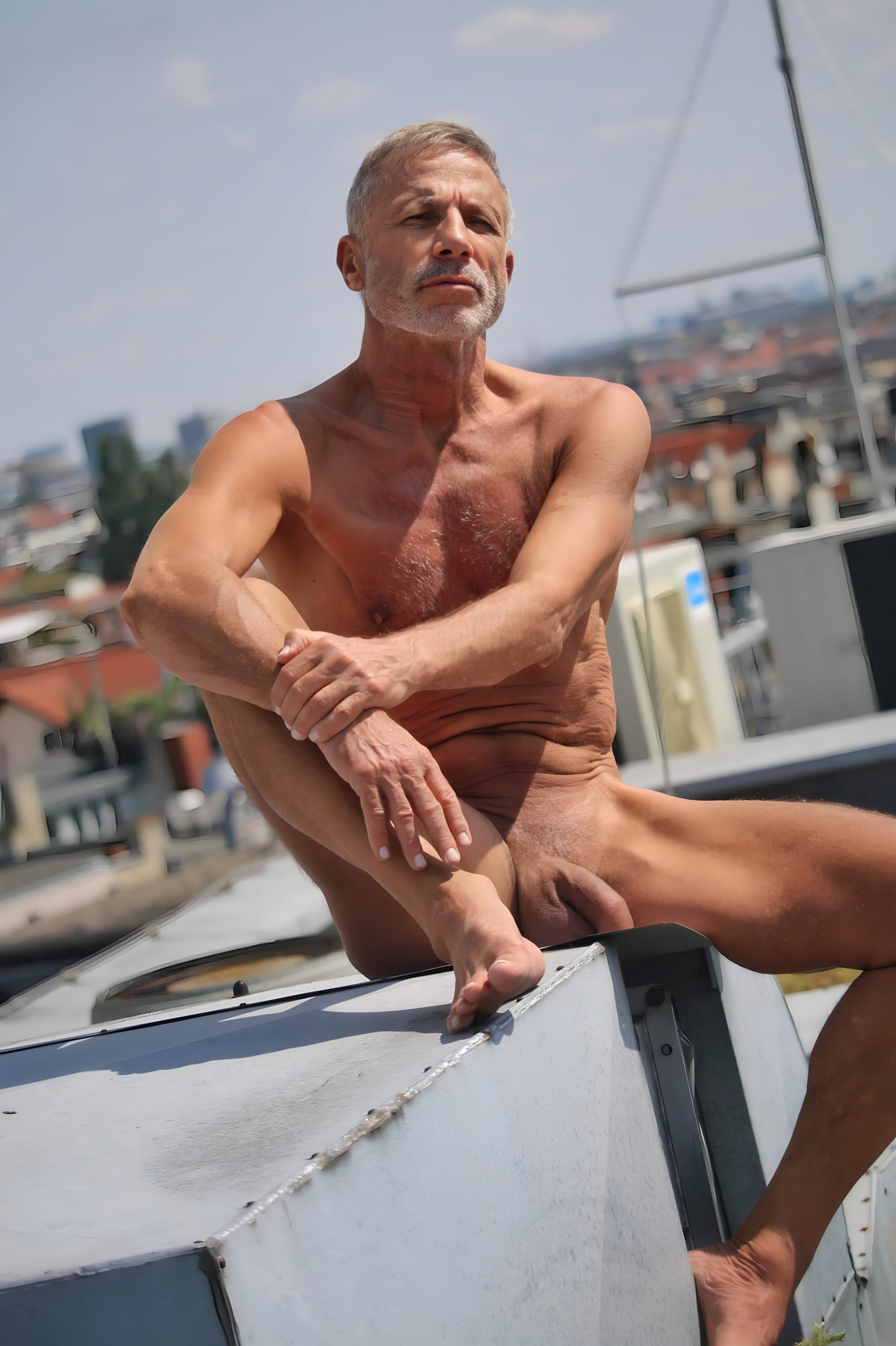
Older men swim, travel, flirt, laugh, make friends, lie in the sun, tell inappropriate jokes, fall in love and occasionally stay up later than the younger guys. Their bodies carry decades of evidence. Skin changes, muscles soften, scars accumulate and gravity continues doing whatever gravity wants.
Seeing older bodies in ordinary social situations matters because visibility changes expectation. If your main exposure to desirable bodies comes through screens, aging starts looking like disappearance. If you spend time around older people actively enjoying their lives, aging looks more like continuation.
Your body at sixty isn’t a defective version of your body at thirty. It’s the body of someone who has lived another thirty years.
You don’t have to celebrate every physical change to appreciate what those years represent.
Perhaps Your Body Was Never the Problem
Spend enough time around ordinary naked bodies and eventually something rather funny happens. You stop finding them unusual.
The belly you would have noticed immediately on your first day becomes somebody’s belly. The scar becomes somebody’s scar. The wrinkles become somebody’s wrinkles. None of those things disappear, yet they stop demanding so much attention.
Then comes the uncomfortable question: if you extend that generosity to everybody else, why are you withholding it from yourself?
Perhaps your stomach isn’t unusually large. Perhaps your wrinkles aren’t shocking. Perhaps your scar doesn’t need an explanation. Perhaps almost everybody’s skin folds when they sit down because skin is supposed to move.
Perhaps the body you’ve spent years trying to correct is simply a human body.
That doesn’t mean giving up on health, fitness or personal goals. Taking care of yourself and accepting yourself aren’t opposing ideas. You’re allowed to want change without treating the person you are today as an unfinished project.
There’s a quieter kind of freedom in reaching that point. You stop postponing the beach until you lose weight. You stop avoiding photographs because you don’t look twenty-five anymore. You stop waiting for some improved future version of yourself to start enjoying the life available to you now.
You Don’t Have to Become a Nudist
Nobody needs to join a nudist club after reading this. You don’t need to book a naked vacation, announce a new identity or start terrifying your neighbors by collecting the mail without pants.
You might start by paying attention to the bodies you consume through screens and how they affect the way you feel about your own. Notice which accounts leave you feeling inspired and which leave you quietly criticizing yourself. Pay attention when you compare an ordinary reflection in the mirror with somebody else’s carefully selected photograph.
Spend more time around real people of different ages. Let yourself see aging instead of avoiding it. Go swimming even if you don’t have the body you thought you would have by now. Take the photograph. Book the trip.
If curiosity eventually brings you to a clothing optional beach, a naturist gathering or a nudist resort, give yourself time to get past the first rush of self-consciousness. Look around without comparing. Talk to people. Notice how quickly the extraordinary becomes ordinary.
You might leave without any desire to call yourself a nudist. You might also leave with a slightly different relationship with the person in your bathroom mirror.
We’ve spent years looking at polished, selected and edited bodies while wondering why our own bodies seem so imperfect by comparison. Seeing real bodies again offers a simple correction to the picture.
Maybe normal was never something we needed to escape. Maybe we simply needed to see more of it.